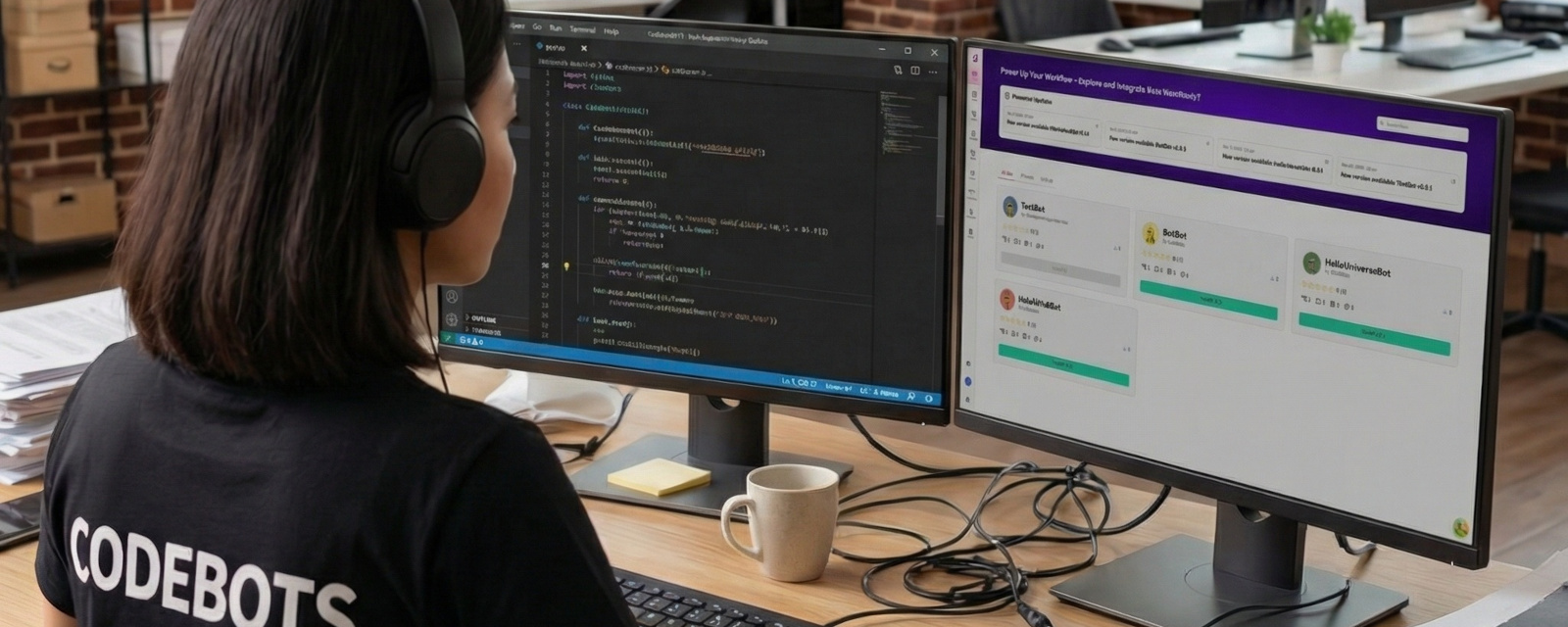
Meet HelloWorldBot from CodeBots
HelloWorldBot provides a hands-on walkthrough of how CodeBots can turn structured thinking into real outputs. Install it from the Marketplace, follow a small example, and watch the platform capture information, automate steps, and produce versioned artefacts you can keep. It’s the simplest way to see the engine running.
You have an idea.
It might begin as a sticky note, a requirement in a document, or a rough sketch of how something should work. The hard part is not having ideas. The hard part is moving them forward in a way that stays clear, consistent and reliable.
Without structure, things drift. Without automation, things stall.
HelloWorldBot is designed to show you a better path.
It offers a short, practical introduction to how CodeBots captures structured information, applies automation and produces real, versioned outputs. The example is intentionally small. The pattern behind it is not. If you want to understand how the platform works in practice, this is the fastest way to start. 🚀
1. Install a bot
Your journey begins in the Marketplace.
Visit the CodeBots Marketplace and install HelloWorldBot into your development organisation.
When you install HelloWorldBot, you are not simply adding a helper. You are installing a packaged capability. A bot brings together models, pipelines and supporting assets that have been deliberately assembled to demonstrate how CodeBots works end to end.
Once installed, everything you need is available inside your organisation. You are not building from scratch. You are stepping into a guided path that has already been prepared for you.
At this point, the platform is set up. Now you can begin shaping your idea.
2. Model your ideas
Most ideas start informally. That is why sticky notes work so well. They are quick to create, easy to rearrange and simple to discard.
In this step, you recreate that experience, but with structure.
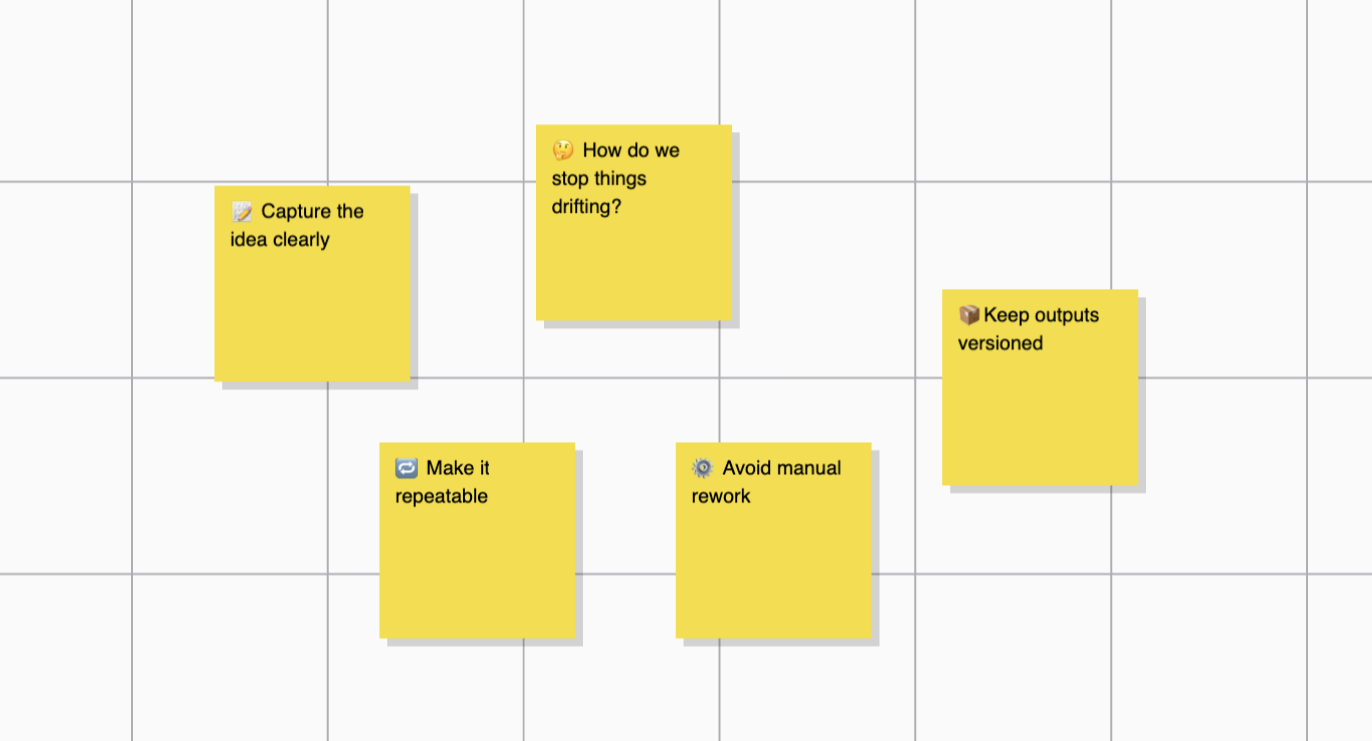
You create a simple Stickies model and capture a couple of thoughts. Then you create a lightweight Todos model that represents organised, trackable work. What looks simple on the surface represents a significant shift. Your ideas are no longer loose text. They are structured models with meaning and relationships.
Once something is modelled, it can be validated, versioned and reused. It becomes the foundation for automation rather than a by-product of it.
The example remains small, but the discipline it introduces is the same discipline used in larger, more complex domains. 🧠
Here’s what those early ideas look like once they’re captured as a model.
3. Transform those ideas
This is the moment where structure proves its value.
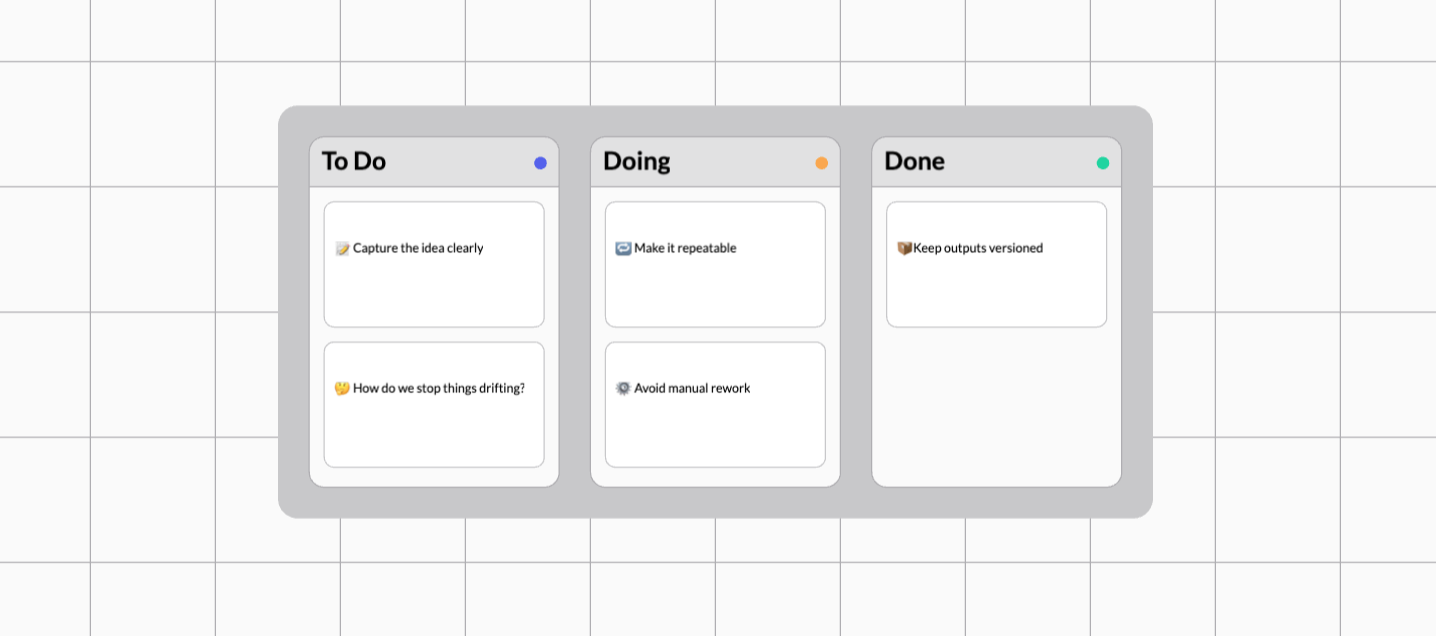
Instead of manually copying your sticky notes into a task board, you run a pipeline. The pipeline applies a transformation that converts your Stickies model into your Todos model automatically. Your original model remains intact. A new model is created. The system performs the work consistently and predictably.
You move from informal ideas to structured tasks without retyping, reinterpretation or manual reshaping. The flow is repeatable. If the inputs change, you run the pipeline again and the outcome updates accordingly.
Without structure, things drift. Without automation, things stall. With both in place, progress becomes steady. ⚙️
Now you can see the same thinking, shaped into trackable work.
4. Generate real outputs
Structured models are powerful, but tangible outputs are what teams rely on.
In this step, you connect a repository and run a generation pipeline. The platform reads your models, applies templates and produces real files. Those files are committed to a versioned repository, creating a durable record of what was generated.
Now the loop is complete. You have captured ideas as models, transformed them through pipelines, and generated concrete artefacts that can be shared and integrated with the rest of your toolchain.
Change the model, run the pipeline again and the outputs update in a consistent way. The feedback loop is tight. The structure remains intact. ✨
5. Where to next
HelloWorldBot is not about sticky notes or task boards. It is about understanding a pattern.
You begin with a model. You apply a transformation. You execute a pipeline. You perform a generation. You keep everything versioned in a repository.
That pattern does not depend on the example. It applies equally to software systems, infrastructure definitions, data processes or operational workflows. The constraint is rarely the platform. It’s usually the starting structure.
You have now walked the full loop once.
To follow the complete golden path step by step, head to the Hello World on the docs site.
Install the bot. Follow the path. See how your ideas move forward when structure and automation work together. 🤝
Discover More
Turning Paths into Organisational Memory
CodeBots helps teams publish new paths into durable knowledge, so what works in one project can guide future work through Docs and ChatStudio.
Follow Golden Paths with ChatStudio
ChatStudio Path Explorer helps teams follow golden paths instead of starting from a blank prompt, turning reusable bot knowledge into guided, governed work.

Bring Your Own Keys to ChatStudio and Keep Control
ChatStudio BYOK lets teams use the AI providers their organisation already approves, discover models directly from those providers, and calibrate execution without giving up control.