What are CRUD operations?
Create, read, update and delete, also known as CRUD, are the central functions to developing any app. In this article, we explain what CRUD operations are and their importance in software development.
CRUD is an acronym worth knowing. It stands for Create, Read, Update, and Delete; CRUD. It is one of the things students of software learn very early and it is also fundamentally important for non-techies to know as well.
CRUD represents the 4 basic operations that you can do on any data. You can create something new. You can update or change it to something else. You can delete it and finally you can simply read it.
That's it! CRUD is a simple concept to understand but it has some wide ranging implications and at CodeBots, we talk about CRUD a lot. If you keep the idea of CRUD at the forefront of building your application you will also understand some other fundamental concepts more easily. Let's take a look at an example.
Have you heard someone talk about HTTP? This is the Hypertext Transfer Protocol (HTTP) and it is one of the standards which enables the Internet to work. Your website would start with it and be something like https://www.w3.org/Protocols/. See at the beginning of the link it start with https, there it is, the s on the end stands for secure.
It sounds complex but let's distill something about HTTP and relate it back to CRUD. When a request is made to a website the HTTP protocol is used and there are a number of request types. The most used ones are GET, PUT, POST, and DELETE. Now, guess what, these are the standard CRUD operations! Check out the following table:
| CRUD | HTTP |
|---|---|
| Create | POST |
| Read | GET |
| Update | PUT |
| Delete | DELETE |
So, HTTP is based on CRUD. The ideas behind CRUD find themselves across many parts of software systems. The reason for this is that all software is constrained by the underlying hardware. At its most basic level, we are dealing with bits of data. If you stop and think about it, what can you do with data? You can create it, read it, update it, and delete it. There is nothing else. Some people like to create finer categories. For example, what about searching? This would be a type of reading. Or, what about sorting? This would be a combo of read and update.
Let's keep it simple and stick to CRUD. All operations come back to CRUD!
So, given that CRUD is sooo very important, how do we make sure we do it properly? For us, this is a great task for a codebot. CodeBots can write full-stack software applications and do a lot of the implementation needed to make a kick-ass application.
At the core of the CodeBots platform is its ability to quickly model and prototype CRUD and database applications.
Discover More
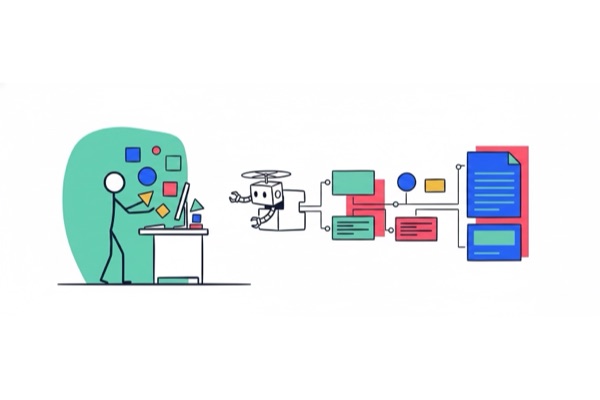
Turning Paths into Organisational Memory
CodeBots helps teams publish new paths into durable knowledge, so what works in one project can guide future work through Docs and ChatStudio.
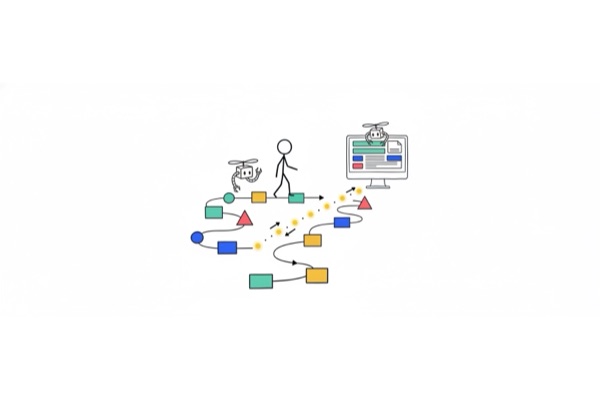
Follow Golden Paths with ChatStudio
ChatStudio Path Explorer helps teams follow golden paths instead of starting from a blank prompt, turning reusable bot knowledge into guided, governed work.

Bring Your Own Keys to ChatStudio and Keep Control
ChatStudio BYOK lets teams use the AI providers their organisation already approves, discover models directly from those providers, and calibrate execution without giving up control.