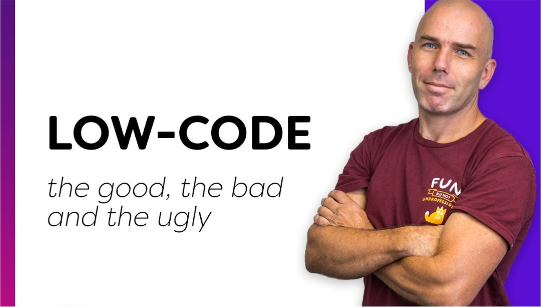
Low-code: the good, the bad and the ugly
The MODELS conference is the premiere annual event where academics and industry come together to present and talk about the state of the art in our industry.
This year, 2021, CodeBots was invited to do the keynote speech at the ACM/IEEE 24th International Conference on Model Driven Engineering Languages and Systems (MODELS) for the low-code workshop track. It was quite an invitation as we do not consider ourselves low-code, we are champions of true innovation.
Summary
Low-code has ignited the enterprise world on fire and attracted a lot of attention to Model-Driven Engineering (MDE). It has been able to empower citizen developers to build apps with minimal input from professional software developers.
While we enjoy the attention to MDE, it stops short of fulfilling the vision of how far MDE can go. Like driving a car around in 1st gear, there are ways we can shift gears and take the high road and elevate innovation even further.
In this keynote, we are going to look at how low-code is only just the beginning and how other technologies have the power to unlock a door into the future.
Highlights
- From saving time and building projects faster, to a low barrier to entry, participants weigh in on why low-code has had such huge growth, particularly in the past 12 months.
- A Stripe report finding shows that key senior executives consider access to developers a bigger risk than access to capital—it's no wonder that enterprises are looking towards low-code technologies to minimise that risk by empowering citizen developers.
- Eban and workshop participants discuss why low-code is like driving a car in first gear. Various issues are raised such as the lack of visibility into the source code, extendability and scalability concerns mean that ultimately, low-code platforms limit citizen developers to pre-built blocks.
- Though there are options to extend, professional developers are needed to customise the app. However, the source code of apps produced by low-code platforms is often not of the best quality and has minimal documentation, resulting in the loss of control over the project and suppression of any true innovation.
- There are three ingredients to success: people, process, and tools. Using Epsilon as an example of the right tools, Eban explains why the key to control is being able to access models and metamodels.
- Eban goes on to show how CodeBots can give control back to an organisation of both professional and citizen developers. By allowing senior and professional developers to develop their own low-code platform that writes in any language they choose and integrates into their existing DevOps process. While citizen developers can use model-driven tool chains to create low-code applications that are more easily customisable, allowing true innovation.
Slides
The slides from the talk are available on SlideShare. Menti was used to present the slides and to create some audience interaction. The results and feedback from the workshop are interesting and worth deeper thought.
Discover More

ChatStudio is Here
ChatStudio is now part of the CodeBots platform, giving teams a governed way to turn structured intent into execution, capture meaningful outcomes, and lay the groundwork for self-improving AI delivery.
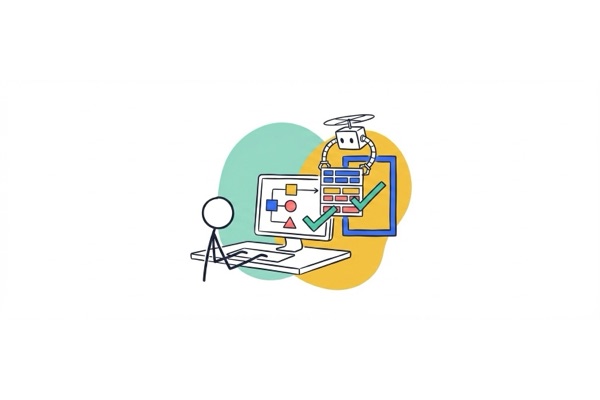
How AI Can Get It Right
Better prompts help, but they are not the whole answer. This article explores how teams improve AI reliability with retrieval, context management, structured workflows, and stronger sources of truth.
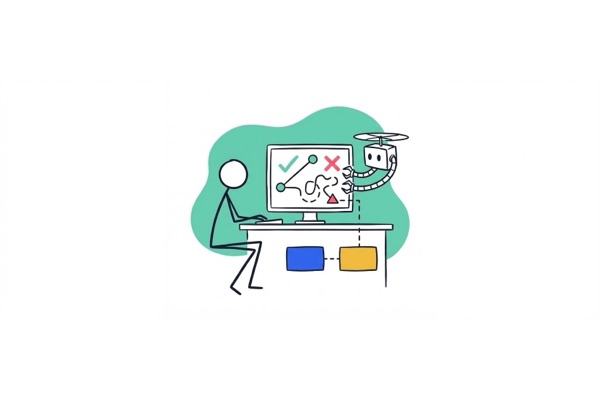
Why AI Gets It Wrong
AI can sound certain while being completely off the mark. This article explains why that happens, from weak context and missing facts to the limits of memory, reasoning, and long conversations.