
Robotic Automation is a Band Aid Solution
RPA tools are pretty cool and it is possible to get some quick short term wins. But are robotic tools a band aid solution to an underlying problem? They are powerful and it is worth knowing which tools is the right one for the job.
Robotic Process Automation (RPA) tools are pretty cool and it is interesting to see where they have come from and how they are being used. Having this knowledge can help you work out how and where you want to use them in your business. Should RPA automation be used for digital transformation projects?
In my opinion, the use of RPA for digital transformation projects is a band aid solution. They are usually layered over the top of existing legacy systems where the organisation has lost the ability to modernise the system. So, instead of working on the root cause of the legacy system, an RPA solution is used to automate some tasks. The benefits of RPA should be treated as a short term solution as the root causes of the legacy system will continue to exist.
CodeBots is not an RPA tool (even though we have some RPA-ish features). We do use bots and we do automate code, but we do not automate processes like RPA tools can do. For example, a typical scenario for an RPA tool is to automate a series of tasks that a human usually has to do, like copy and pasting some data from one system to another. Automating this process can can save a lot of time. The RPA-ish features we do provide are in our platform written tests that we discuss below.
Robotic Process Automation Tools
There are many RPA solutions on the market with some new players coming in and some old players rebranding products and their market positioning to play in the space. Some of the more well-known RPA robotics tools are listed below and you can read some reviews from Gartner and some Forrester to get some deeper insight.
- UIPath
- Automation Anywhere
- Blue Prism
- TruBot
- AutomationEdge
Another common question about RPA is it considered artificial intelligence (AI)? I would say that AI is very broad umbrella and that the software architectures used would put it in this area. Even though it does not fit under the 6 technologies behind AI, in my opinion, RPA is a form of AI but at that very weak end of the spectrum. If you are interested in this check out this article on the difference between robotic process automation and artificial intelligence.
Using Natural Language for Robotic Automation
RPA-ish tools have been around for a long time but it has been advances in software testing tools that have helped ignite the industry. Software testing tools like Selenium that allow the programmatic driving of a browser coupled with Behaviour Driven Development (BDD) tools like Cucumber having really lowered the barriers to making great tools.
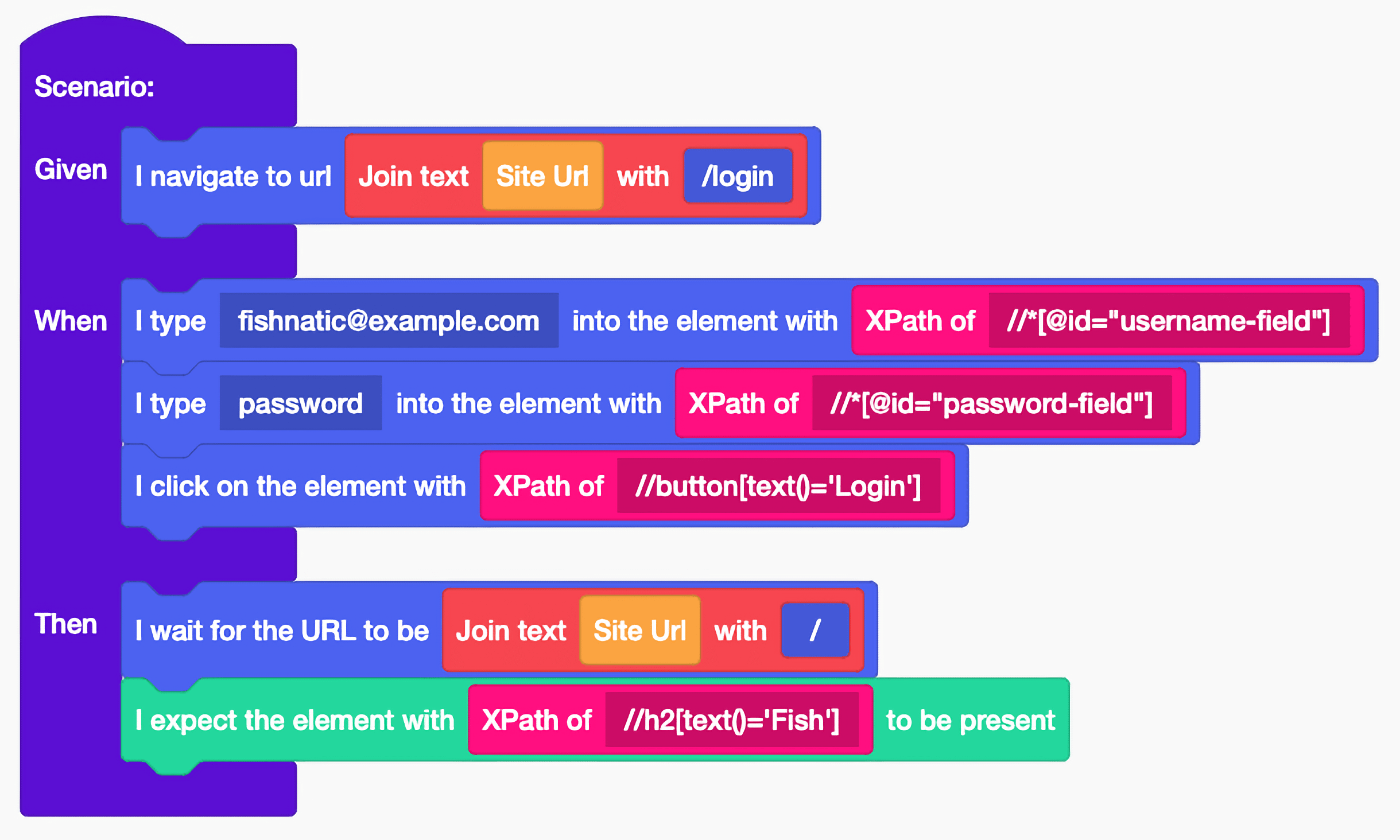
To live our brand promise of Quality at Speed, we have 3 types of testing; platform written tests, bot written tests, and developer written tests. For the platform written tests we have created a RPA-ish tool that allows a user to build a test case using a Scratch like language. If you have not seen it, Scratch is the programming language we use to teach children how to code. Think of it like lego meets logic. You can click the bricks together to describe your test. This is a slightly different approach to traditional RPA tools that use flowcharts and the like.
Discover More
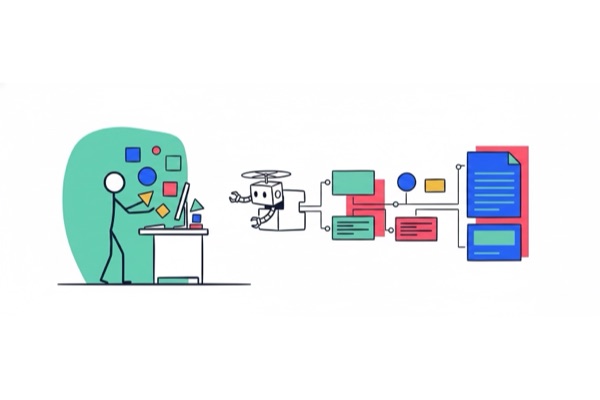
Turning Paths into Organisational Memory
CodeBots helps teams publish new paths into durable knowledge, so what works in one project can guide future work through Docs and ChatStudio.
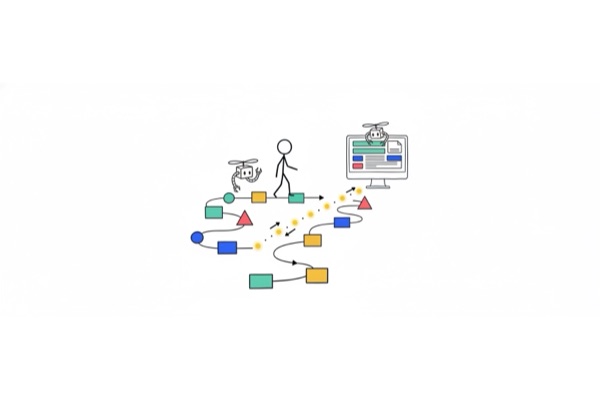
Follow Golden Paths with ChatStudio
ChatStudio Path Explorer helps teams follow golden paths instead of starting from a blank prompt, turning reusable bot knowledge into guided, governed work.

Bring Your Own Keys to ChatStudio and Keep Control
ChatStudio BYOK lets teams use the AI providers their organisation already approves, discover models directly from those providers, and calibrate execution without giving up control.