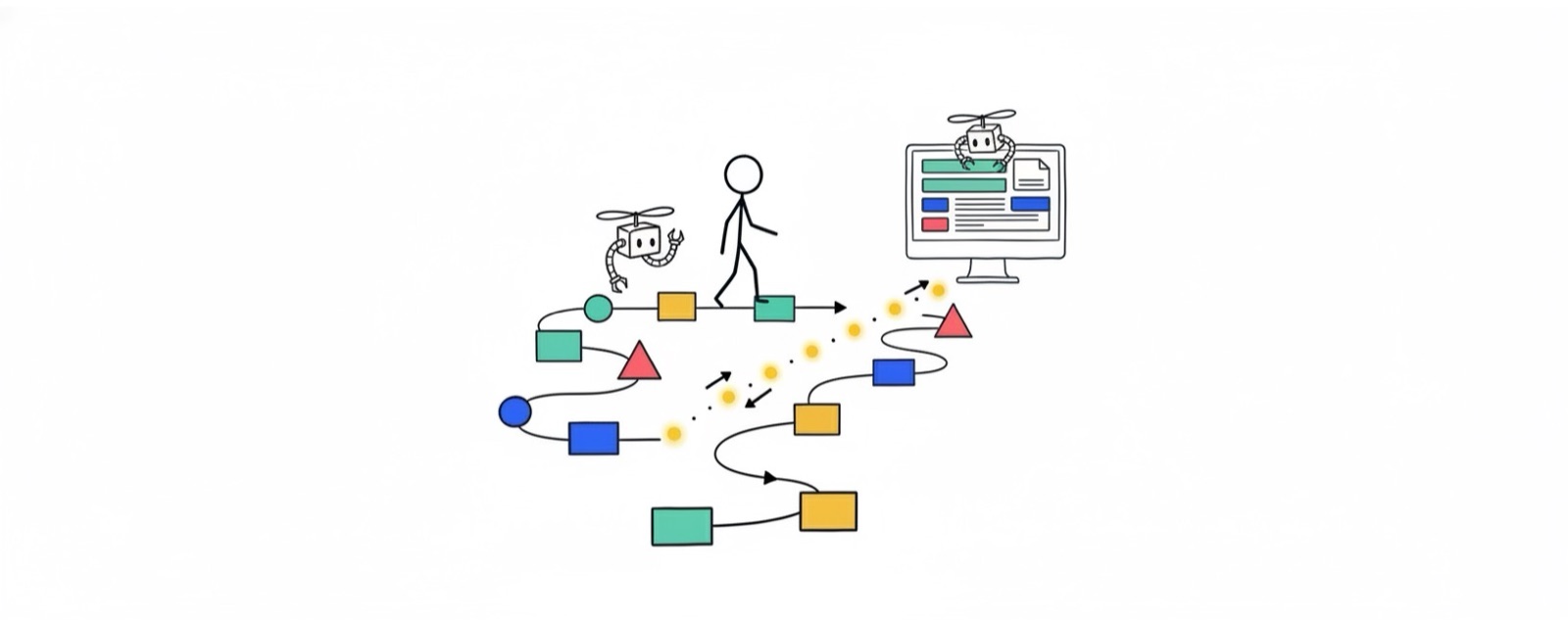
Follow Golden Paths with ChatStudio
ChatStudio Path Explorer helps teams follow golden paths instead of starting from a blank prompt, turning reusable bot knowledge into guided, governed work.
Most AI tools still start with a blank prompt box. That is fine for experimentation. It is a poor way to run repeatable work.
If your organisation already knows the better route, the platform should not make every user rediscover it from scratch. It should surface the supported path, show what good looks like, and help people begin with more structure and less guesswork.
That is the point of golden paths. In ChatStudio, the Path Explorer turns published bot knowledge into something people can actually follow.
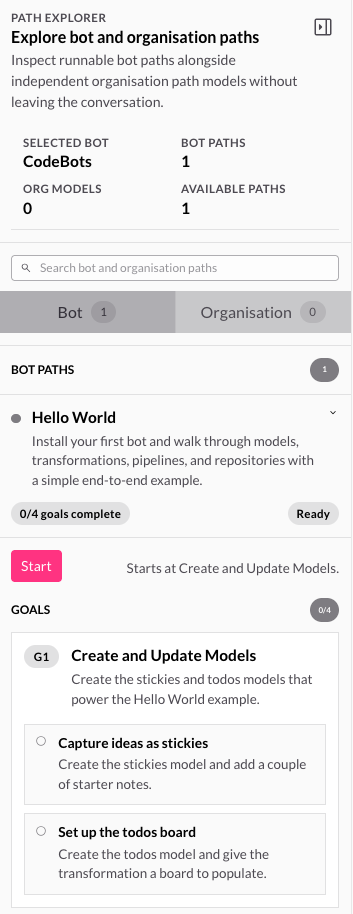
Instead of hoping the user asks the right question, the Path Explorer lets them browse a supported path, inspect the goals and stages, and start from something better than improvisation.
Why golden paths matter
Golden paths matter because most delivery drift starts before the first useful answer. It starts when every user has to decide what to do, what order to do it in, and which details matter most.
That creates unnecessary cognitive load. It also creates inconsistency. Two people can be trying to achieve the same outcome and still follow different approaches simply because the platform gave them a blank box and no shared route.
A good golden path fixes that. It gives people a supported, discoverable way to do a common piece of work. It does not remove judgement. It reduces avoidable guesswork.
In platform engineering terms, that usually means an opinionated, supported way of building, a paved road for common workflows, or a self-service template that reduces cognitive load.
In CodeBots, that matters because ChatStudio is not meant to be just another chat interface. It is the governed execution surface in a broader drift control system. Golden paths help carry the structure that already exists in bots, models, and published knowledge back into the moment where work actually happens.
That is the important distinction. A golden path is not a cage. It is a better starting point.
What Path Explorer changes in ChatStudio
Path Explorer brings that idea into the ChatStudio experience directly. Instead of asking the user to invent the workflow from scratch, it exposes authored paths in the right rail where they can be browsed before work begins.
That matters for two reasons. First, the user can see what the path is for, what goals it contains, and how far each stage has progressed. Second, the user can choose to start from the supported route instead of relying on prompt craft or institutional memory.
That small shift changes the posture of the tool. ChatStudio stops feeling like a blank conversational surface and starts feeling like a guided work environment.
Some paths are shipped with the bot. Others are published at the organisation level and surfaced alongside them. Either way, the experience is the same: the user can inspect the route, understand what is about to happen, and begin with more confidence.
Follow published knowledge, not just prompts
One of the more interesting parts of this is where the paths come from. A path in ChatStudio is not just a saved prompt template with a nicer label. It can be authored, structured, versioned, and published as durable knowledge.
When a team turns a successful approach into a published path, that approach stops living in one person's habits. It becomes something the organisation can expose, improve, and reuse.
That is where the self-improvement loop begins to show up. A team learns something once, publishes the path, and the next user does not need to rediscover the same sequence from scratch.
That is also why golden paths fit so well here. The path is opinionated enough to be useful, but transparent enough that the user can see the goals and stages in front of them. The route is supported, not hidden.
Better outcomes through guided execution
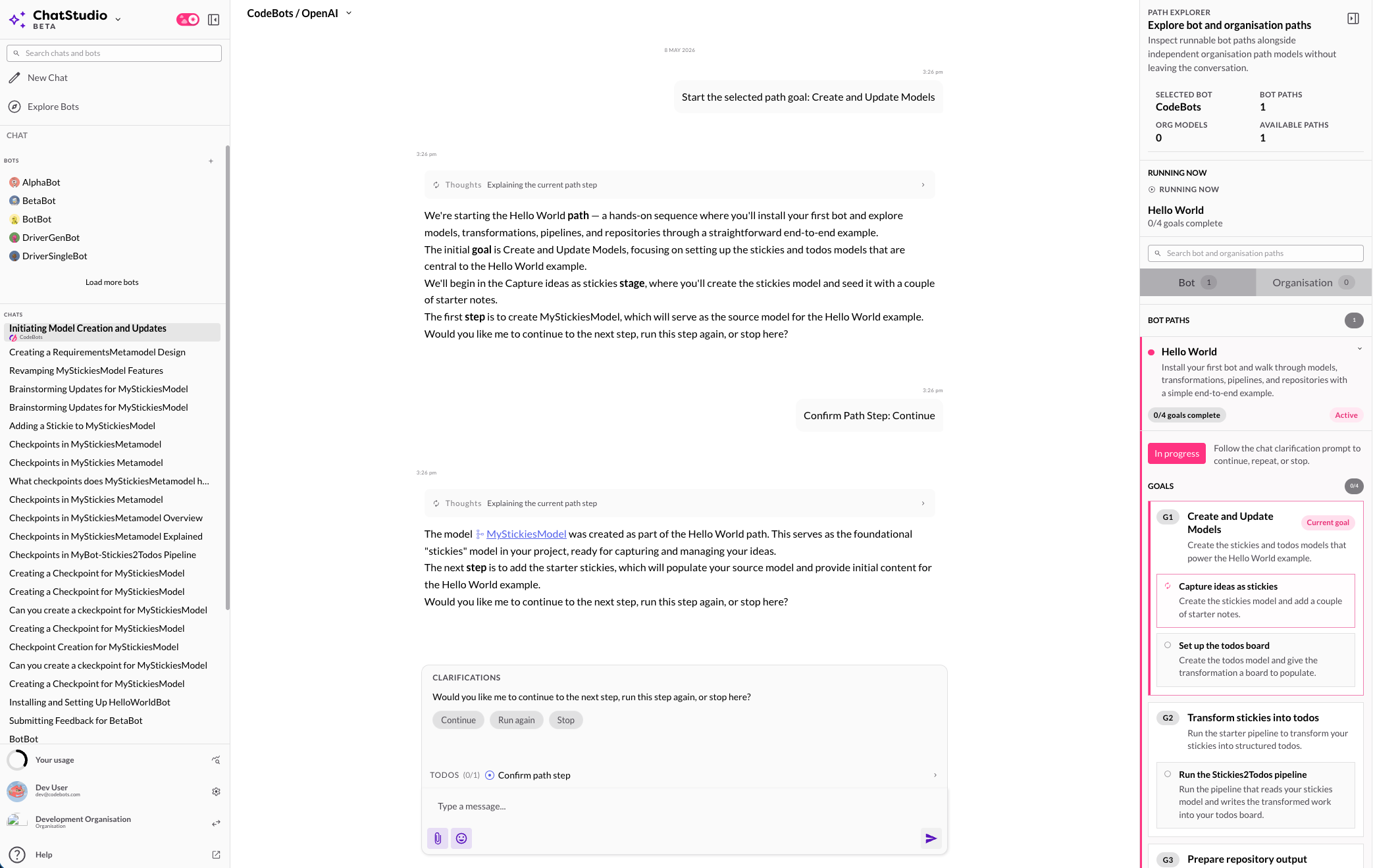
This is what self-improvement looks like in practice. A user opens ChatStudio, sees the Path Explorer, follows an existing path, and gets better outcomes because reusable bot knowledge is already there to guide the work.
That is a much stronger pattern than asking every user to prompt from first principles.
Guided execution does not just save time. It improves consistency, reduces missed steps, and makes the outcome easier to repeat. It also gives the organisation a practical place to put its approved way of working.
That matters more as AI use grows. Once multiple teams, bots, and workflows are in play, speed on its own is not enough. Teams need a way to move quickly without losing control, and that means starting from structured intent rather than one-off improvisation.
Path Explorer is a simple feature on the surface. Underneath, it is a visible sign of the bigger CodeBots thesis: successful work should compound.
What to try next
If you want to see the pattern for yourself, start with a bot that already carries published path knowledge and open Path Explorer before you type anything.
Browse the path. Expand the goals. Start from the supported route. Then compare that experience with the usual blank-box workflow most AI tools still expect.
That is the difference ChatStudio is aiming for. Less isolated prompting. More guided execution, reusable knowledge, and delivery that improves each time it is used.
To explore it now:
Discover More
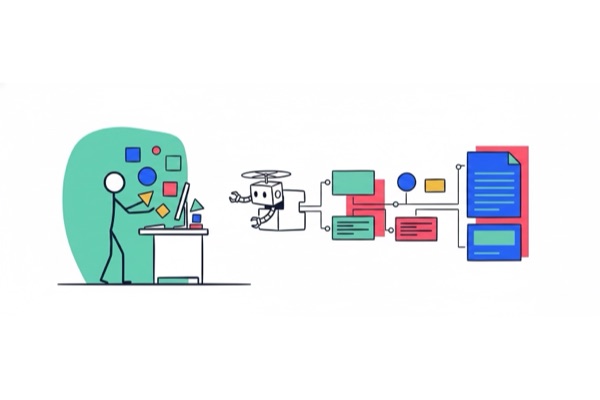
Turning Paths into Organisational Memory
CodeBots helps teams publish new paths into durable knowledge, so what works in one project can guide future work through Docs and ChatStudio.

Bring Your Own Keys to ChatStudio and Keep Control
ChatStudio BYOK lets teams use the AI providers their organisation already approves, discover models directly from those providers, and calibrate execution without giving up control.

ChatStudio is Here
ChatStudio is now part of the CodeBots platform, giving teams a governed way to turn structured intent into execution, capture meaningful outcomes, and lay the groundwork for self-improving AI delivery.