Turning Paths into Organisational Memory
CodeBots helps teams publish new paths into durable knowledge, so what works in one project can guide future work through Docs and ChatStudio.
Useful AI work does not become organisational memory just because it happened in a chat.
Most of the value is lost unless someone turns the successful approach into something structured, published, and reusable. Otherwise the organisation got an answer for one session, but it did not gain a capability it can rely on next time.
That is what self-improvement looks like in CodeBots. Teams can author new paths, publish them through Docs and Paths, and bring that knowledge back into ChatStudio so future work starts from something better than memory or hearsay.
That is what we mean by turning paths into organisational memory.
Why chat history is not organisational memory
Chat history is useful context. It is not a durable knowledge system.
A conversation can show what happened for one person at one moment. It does not reliably give the rest of the organisation a stable, navigable, approved version of that knowledge.
As AI use scales, that becomes a real problem. Teams repeat the same guidance in slightly different ways. Useful patterns stay trapped in working notes. Good prompts become folklore. Eventually the organisation has activity, but very little reusable memory.
Organisational memory needs more than recall. It needs structure, shared language, versioning, and a place where others can discover and trust what was published.
That is a gap CodeBots is designed to close.
Author new paths from working knowledge
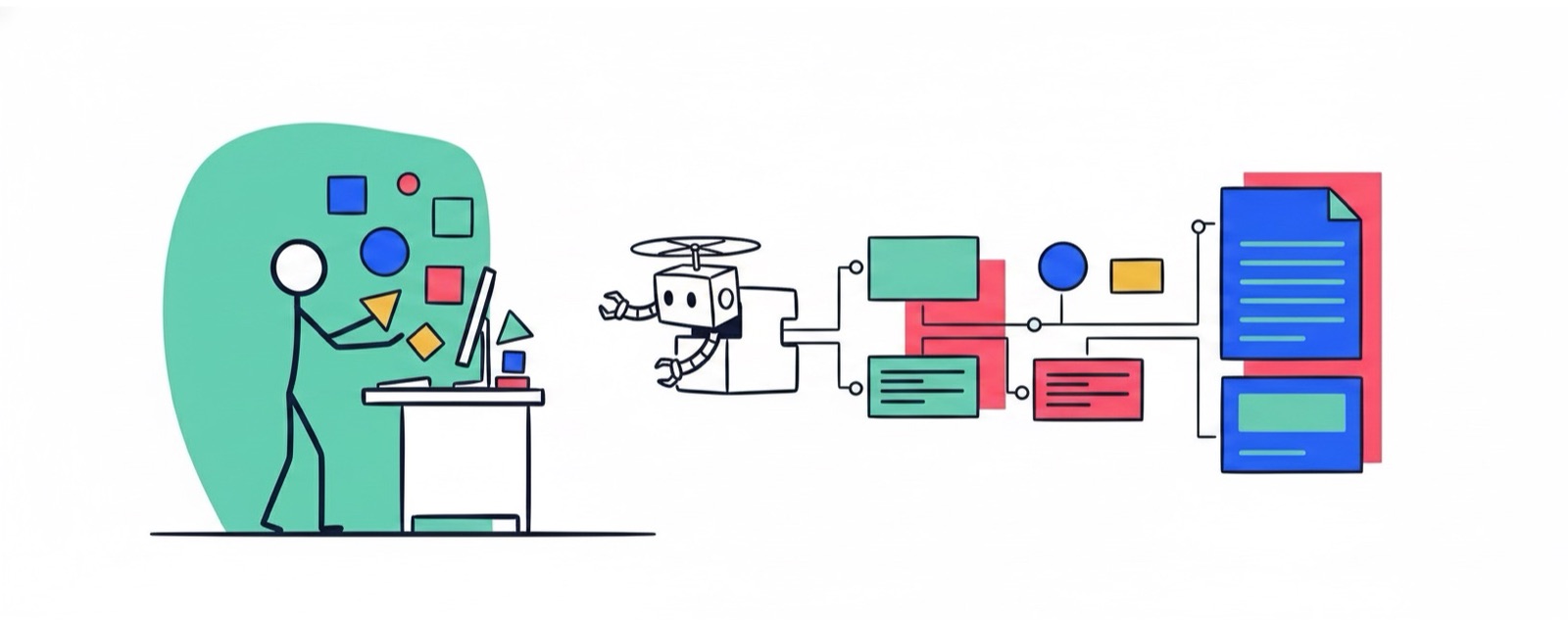
In the builder loop, a team starts by taking something that worked and making it explicit.
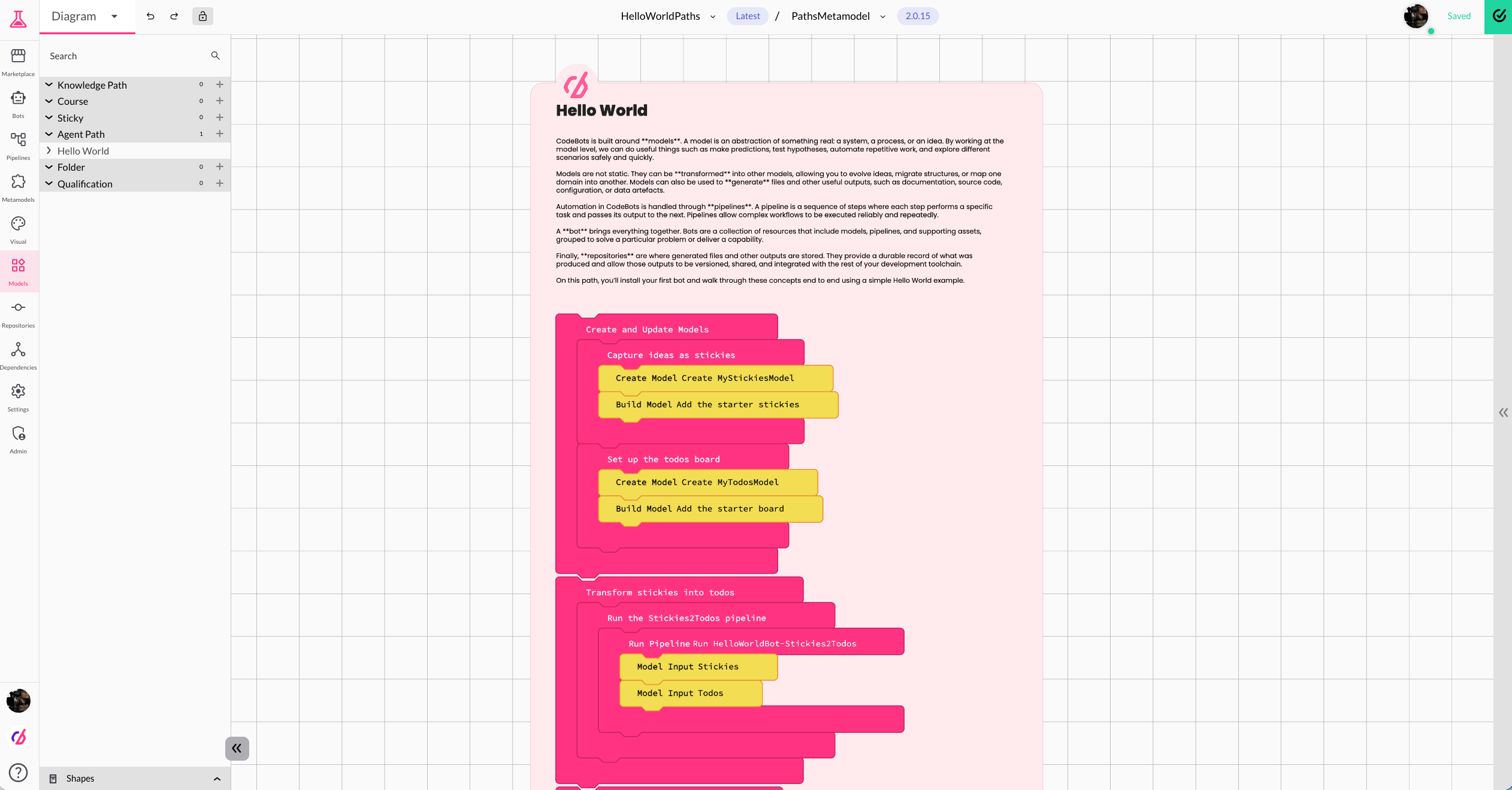
In AILab, that can mean creating or updating Paths and Terminology models, shaping the guidance into a reusable route, and connecting it to the bot dependencies that will carry it forward.
This matters because expertise is rarely born in perfect final form. It usually starts as working knowledge: a good sequence, a better explanation, a pattern that solved the problem last time. The job is to turn that into something the next person can reuse without needing the original author in the room.
Paths help capture the sequence. Terminology helps stabilise the shared language around it. Together, they make the guidance more portable than a chat transcript or a private notebook.
Publish paths into durable assets
The publishing step is the real turning point.
Once a path is versioned and released, the knowledge is no longer just a draft or a working note. It becomes a durable asset that can be navigated through Docs and reused across teams.
That matters because good organisational memory is not just stored. It is curated. A published version gives people something stable to point at, review, and improve over time.
That is also why this is more useful than keeping everything in a chat log. Published knowledge has a clearer lifecycle. Teams can work in progress while they are shaping the idea, then release the version that is ready to guide other people.
In the demo flow, this is the moment where a new version kicks off the pipeline that produces the docs. Knowledge moves from working notes into a durable, navigable asset.
Bring organisational memory back into ChatStudio
The loop closes when that published knowledge stops being just documentation and starts guiding future work.
After the new path is published, you can return to ChatStudio and ask a question that surfaces the newly published guidance. At that point the path is no longer trapped in a builder workflow. It has become bot knowledge.
That is the payoff. The next user is not depending on someone else's memory, a stale internal wiki, or a lucky prompt. They are benefiting from something the organisation deliberately authored and published.
That is why organisational memory is the right phrase here. The knowledge is durable enough to survive beyond the original session, structured enough to be searched and reused, and close enough to execution that it can influence what happens next.
Build a self-improving delivery system
Seen end to end, the pattern becomes clear.
First, users follow existing golden paths in ChatStudio and get better outcomes through reusable knowledge. Then builders take what works, turn it into new paths, publish it through Docs, and feed it back into the bot for future work.
That is how CodeBots turns one-off AI delivery into a self-improving system.
Instead of letting success disappear into isolated chats or finished projects, the platform gives teams a way to convert it into reusable capability. That is better for consistency, better for onboarding, and better for organisations that want AI to scale without losing structure.
The end goal is not more activity. It is better memory, better guidance, and better outcomes each time the system is used.
To see more of the platform in action:
Discover More
Follow Golden Paths with ChatStudio
ChatStudio Path Explorer helps teams follow golden paths instead of starting from a blank prompt, turning reusable bot knowledge into guided, governed work.

Bring Your Own Keys to ChatStudio and Keep Control
ChatStudio BYOK lets teams use the AI providers their organisation already approves, discover models directly from those providers, and calibrate execution without giving up control.

ChatStudio is Here
ChatStudio is now part of the CodeBots platform, giving teams a governed way to turn structured intent into execution, capture meaningful outcomes, and lay the groundwork for self-improving AI delivery.