The Next Phase of Enterprise AI: Inside the CodeBots Roadmap
Enterprise AI is entering a new phase. The early wave focused on access to powerful models and rapid experimentation across teams. Now the challenge is operationalising AI. Organisations need structured ways to build reliable systems that are governed, repeatable, and maintainable at scale. In this post, we outline the three phases of enterprise AI and share what is coming next in the CodeBots roadmap, including Chat Studio, Knowledge Base, Metamodel Visuals, and DataIQ.
Enterprise AI is entering a new phase.
The first phase was access to AI models. The second was a wave of experimentation across teams. The next phase is different.
What changes now is not whether AI exists, but how enterprises operationalise it. The next phase of enterprise AI is less about clever demos and more about building reliable systems: governed, repeatable, maintainable, and shareable.
This post is a first look at how we’re thinking about the CodeBots roadmap as we move into that next phase.
The three phases of enterprise AI
- Phase 1 (Access to AI): Enterprises gained access to powerful foundation models and began experimenting with copilots, assistants, and AI-enabled features.
- Phase 2 (AI experiments at scale): AI adoption spread across teams, creating many prototypes and pilots but often without consistent architecture, standards, or governance.
- Phase 3 (Structured enterprise AI): Organisations shift from prototypes to dependable AI-powered systems using structured development practices, shared standards, and governed platforms.
Phase 3 is where “AI” stops being a feature and starts being a capability you can build on.
What’s on the CodeBots roadmap
Two things are next in the queue (weeks, not months): Chat Studio and Knowledge Base. These are the near-term releases that move teams from “AI experiments” into a repeatable, organisation-scale workflow.
Two more are following later in 2026 (already underway): Metamodel Visuals and DataIQ. They push deeper into the platform foundations that make structure feel great and make delivery measurable.
Below is the “why” behind each, and what it unlocks as teams move into Phase 3.
Chat Studio
If Phase 1 was about getting access to models, Phase 3 is about building repeatable workflows around them.
Chat Studio is designed to bring that workflow into one place: structured context, real artefacts, and a development loop that can scale beyond one person’s chat history.
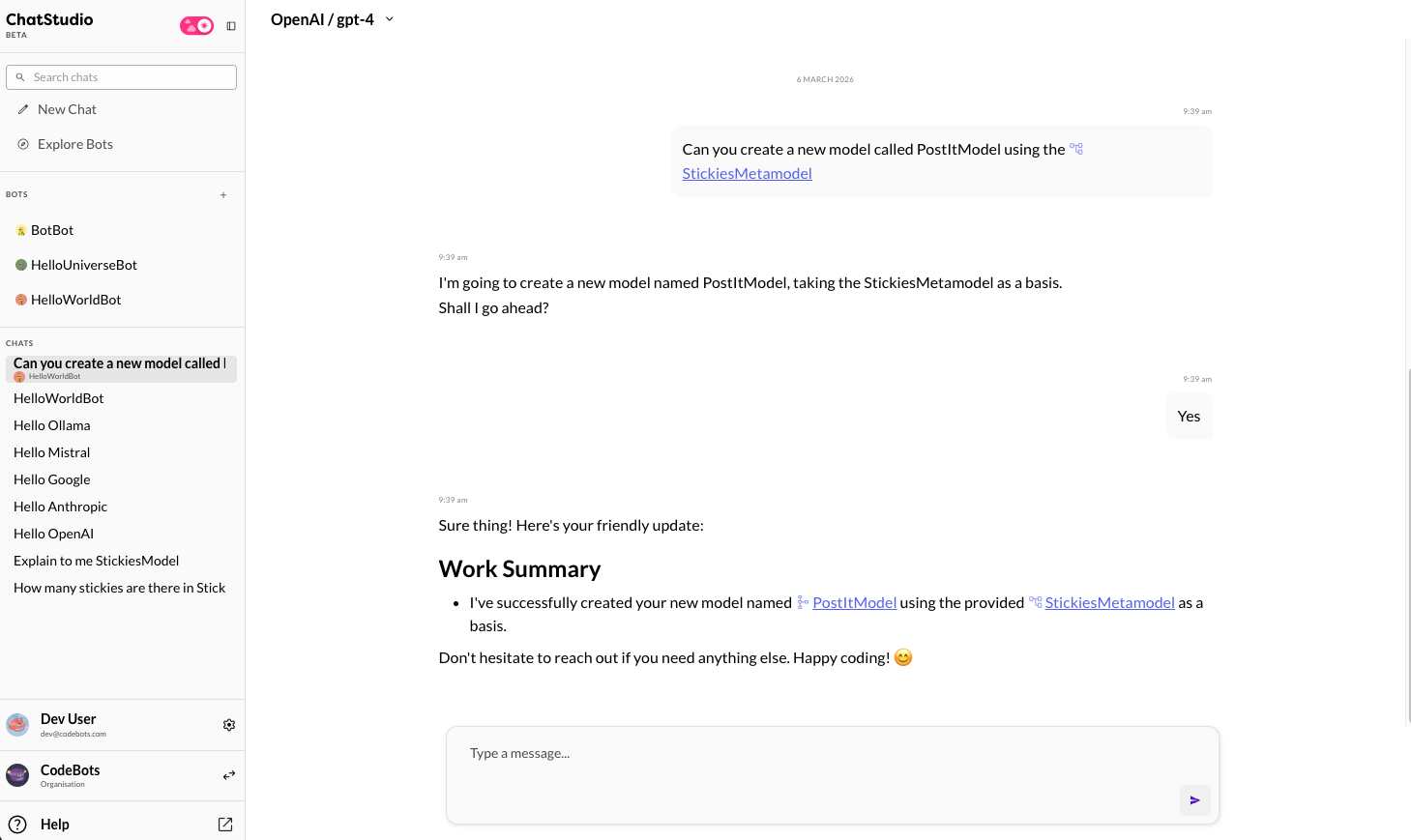
Chat Studio supports BYOK because procurement and finance have already made decisions about which providers are approved and how spend is managed.
But BYOK is not the only way in.
We also provide AI models you can use out of the box, and when you need enterprise-grade control you can connect your organisation’s existing provider accounts.
Providers supported today include Anthropic, DashScope (Alibaba Cloud Qwen), Google (Gemini), Mistral, OpenAI, and Ollama (local runtime).
🔧 Status: Nearing completion.
Knowledge Base
The Marketplace makes it possible to share capabilities across organisations.
But capability isn’t just code.
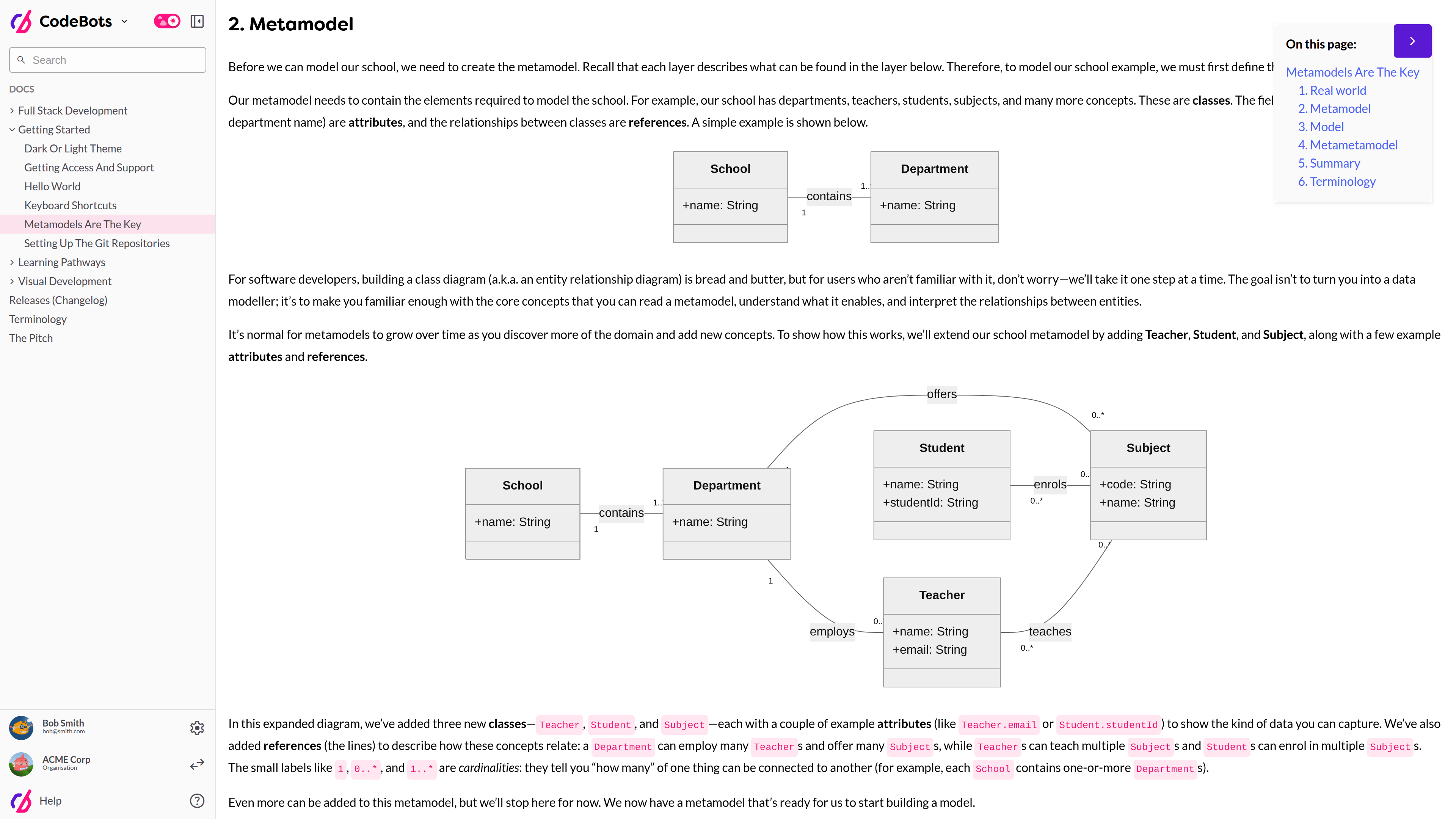
In an enterprise, the hard part is often sharing the knowledge behind the work: the golden paths, the conventions, the “how we do this safely here” decisions that prevent every team from relearning the same lessons.
The Knowledge Base is about turning that knowledge into something that can be shared and reused the same way bots can.
🔧 Status: Nearing completion.
Metamodel Visuals
People eat with their eyes.
If models are how we encode structure, then the modelling experience has to feel structured too: clear, legible, and pleasant to work in.
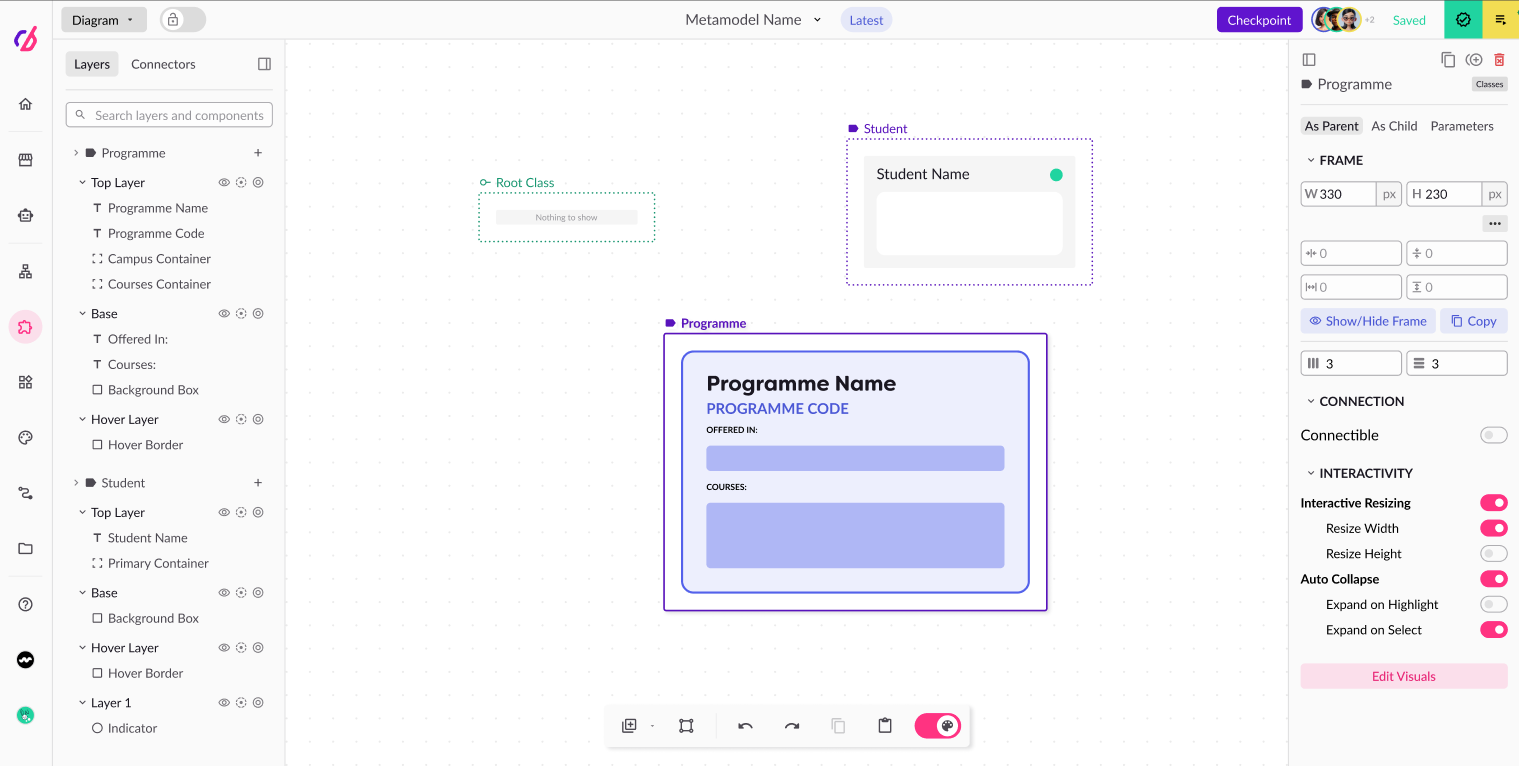
We already have visual libraries, but the roadmap here is bigger: we’re combining metamodelling and visuals into a unified UX. One flow. One mental model. Less context switching.
Think “Figma-level polish for models”, but grounded in real engineering outcomes.
🔧 Status: UX complete. Development phase underway.
DataIQ
Phase 3 needs feedback loops.
DataIQ is our analytics layer for platform delivery: visibility into quality, performance, and maintainability as teams build.
The core idea is “analytics by design”: models automatically produce structured data, including star schemas, so reporting is reliable and repeatable.
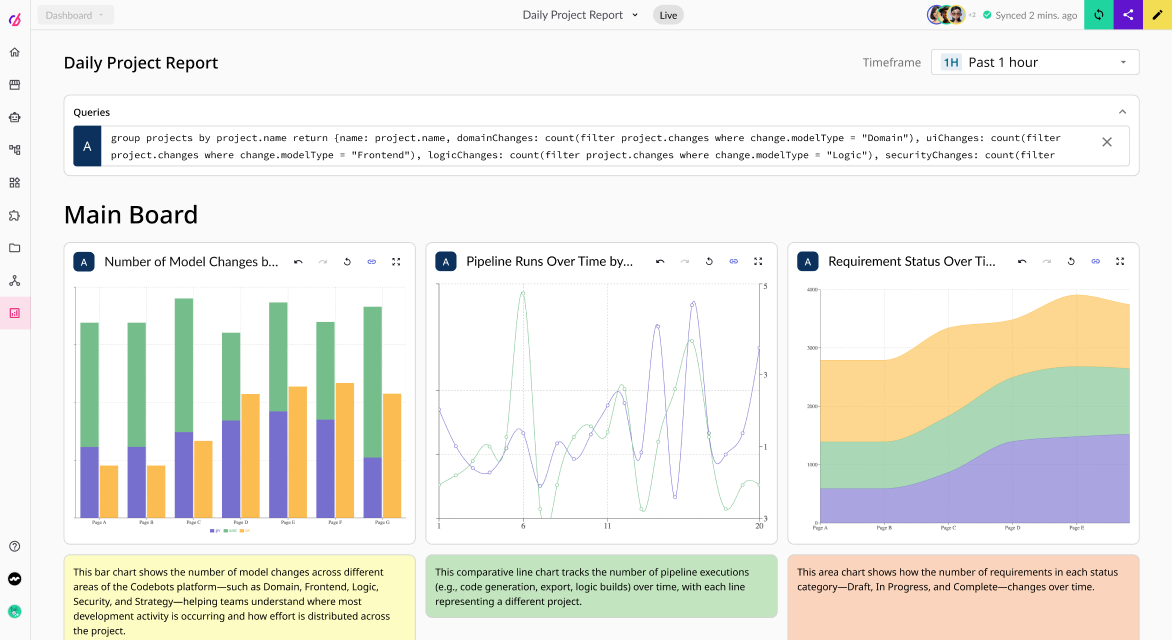
🔧 Status: R&D completed. Server-side done. Reusable components ready. Next step is finalising the UX.
Summary
Enterprise AI is entering Phase 3. Less experimentation, more systems you can depend on.
That is what this roadmap is aimed at. Chat Studio and Knowledge Base are next (weeks, not months), so teams can move faster with a workflow and shared knowledge that scales beyond individual chats and one-off prototypes.
Metamodel Visuals and DataIQ follow later in 2026, and they are already underway. We are excited about what this unlocks for enterprise teams, because the goal is not hype. It is operational leverage, speed with standards.
Discover More
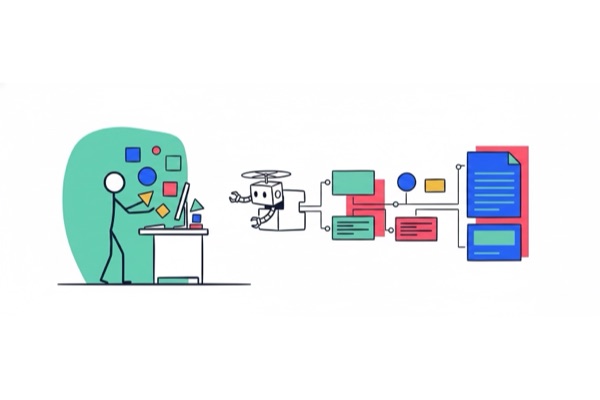
Turning Paths into Organisational Memory
CodeBots helps teams publish new paths into durable knowledge, so what works in one project can guide future work through Docs and ChatStudio.
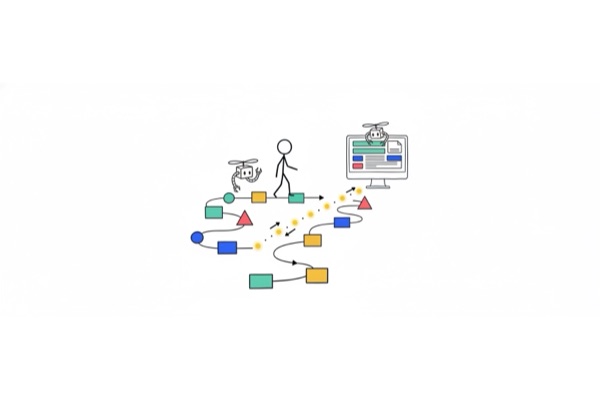
Follow Golden Paths with ChatStudio
ChatStudio Path Explorer helps teams follow golden paths instead of starting from a blank prompt, turning reusable bot knowledge into guided, governed work.

Bring Your Own Keys to ChatStudio and Keep Control
ChatStudio BYOK lets teams use the AI providers their organisation already approves, discover models directly from those providers, and calibrate execution without giving up control.